
Dahna-e-Farang: Banded Malachite
Malachite is a vivid green copper mineral with swirling light and dark bands, polished into bold cabochons, beads and carvings.
Stones


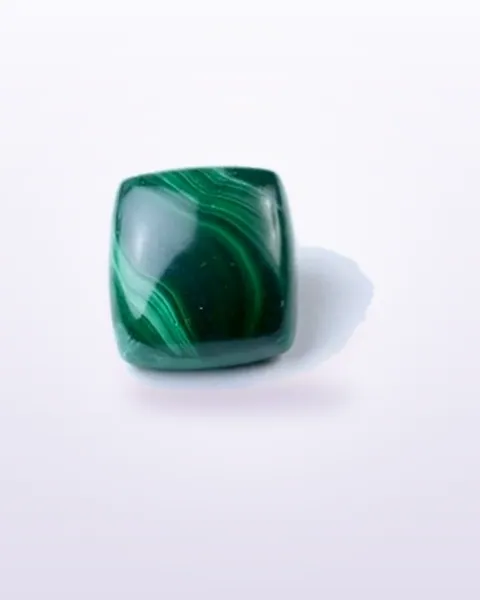
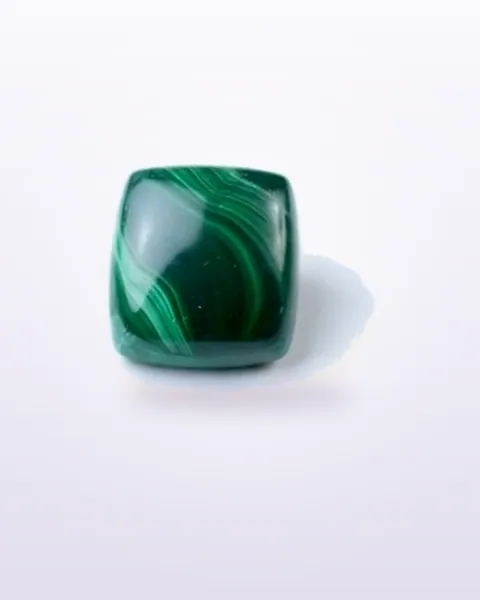
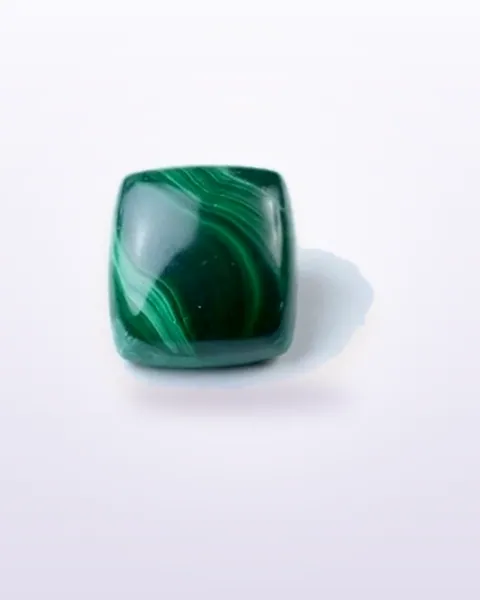

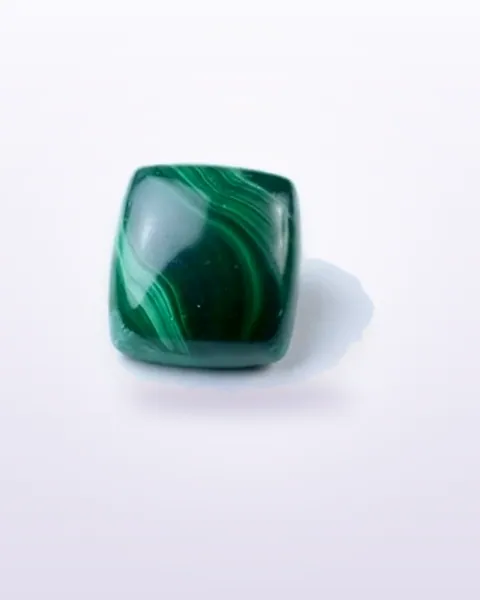


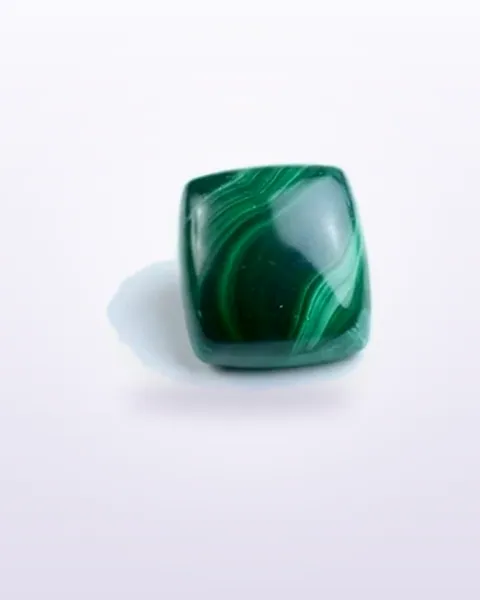
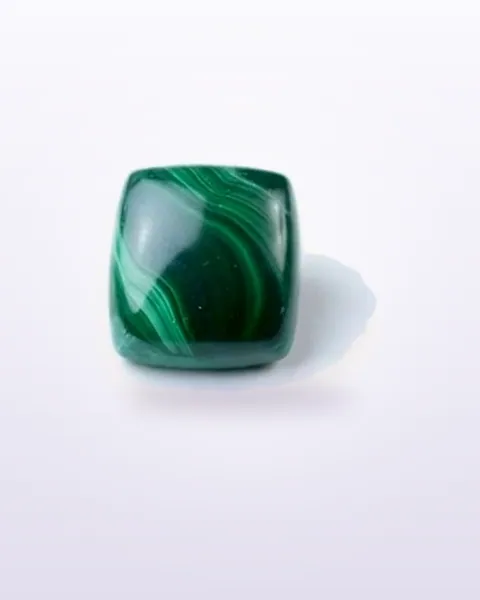

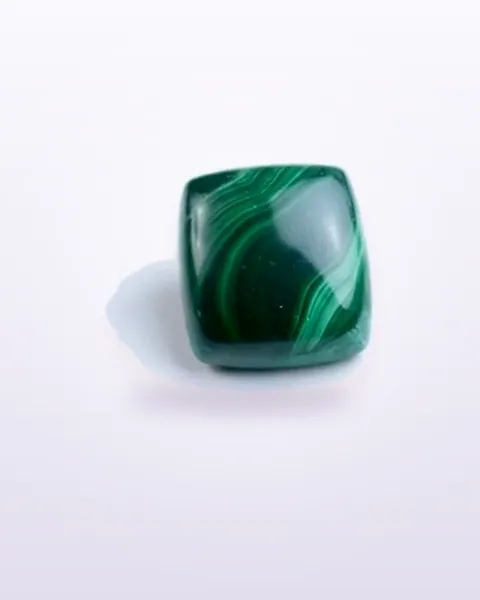

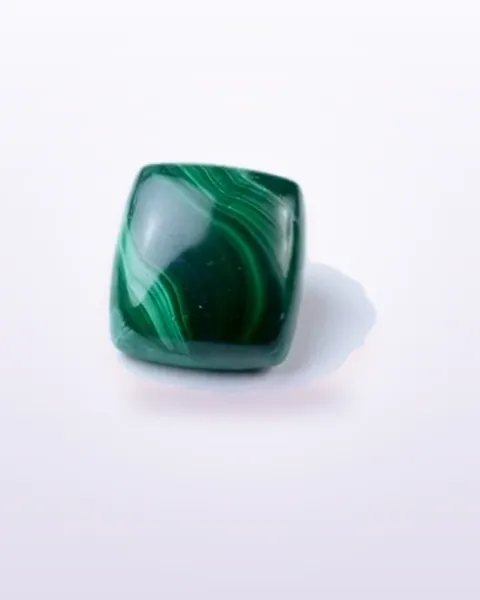

Malachite is a copper carbonate. It forms in the weathered upper parts of copper deposits, building up in layers that show as concentric rings and swirling stripes of light and dark green when polished. Some pieces show bull's-eye circles, others wavy lines like a river seen from above. In older Urdu the name Dahna-e-Farang is used for this stone.
Much of today's malachite comes from the Democratic Republic of Congo, with historic material from the Ural Mountains of Russia, where it once decorated palace columns.
Choosing malachite
Pattern is everything. Crisp, high-contrast bands and clear bull's-eyes are the most prized. Look for a smooth, glassy polish; malachite is soft, so poor polishing shows as a dull or wavy surface. Small pits are common and acceptable if they are not on the face.
Malachite is often stabilised with resin or waxed to improve durability and shine. Imitations include dyed or printed stone, glass and plastic, and reconstituted malachite made from powder. Natural banding has subtle variation and depth that printed patterns lack. Every stone's page records whatever treatment we are aware of.
Malachite is chosen for its striking look rather than for any traditional astrology role here. It suits pendants, cufflinks and statement rings.
This is a delicate stone. At 3.5 to 4 on the hardness scale, it scratches easily and is sensitive to acids, heat and even household cleaners. A bezel is essential for rings, and a pendant is the better daily choice. Keep it away from perfume and lemon juice. Clean only with a soft cloth and plain lukewarm water, then dry it straight away.