
Chandrakant: Moonstone Gems
Moonstone, the Chandrakant of older texts, shows a soft blue or white glow that drifts across the stone like moonlight on water.
Stones

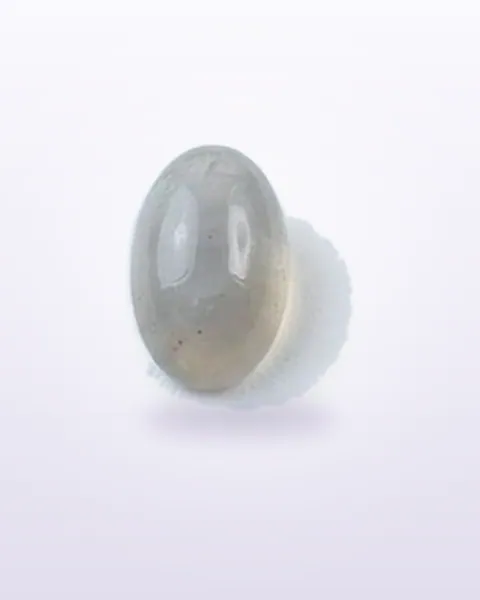

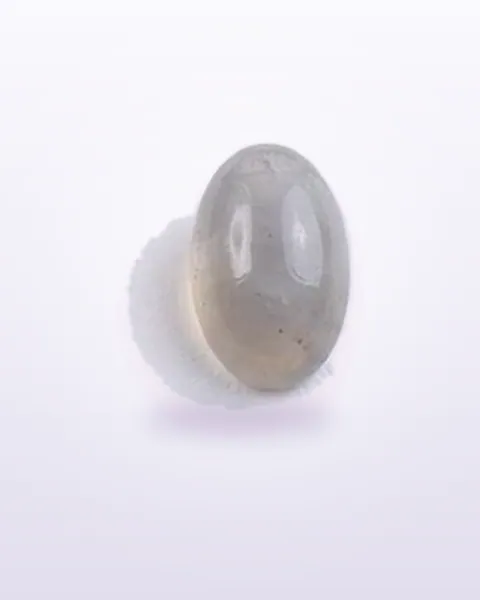

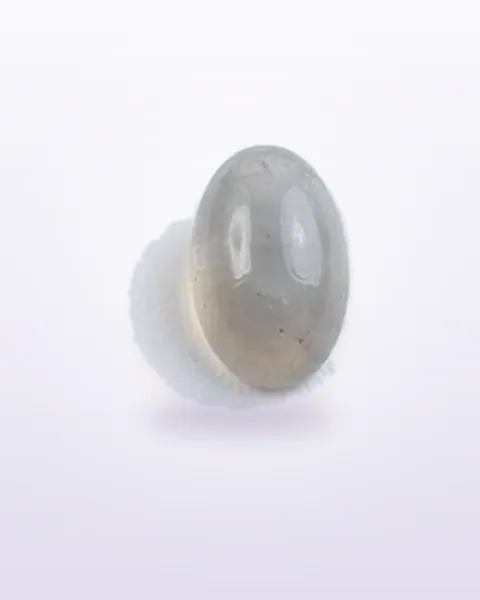


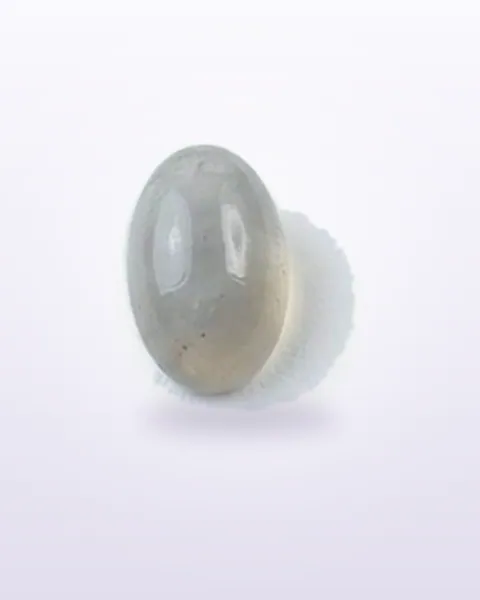


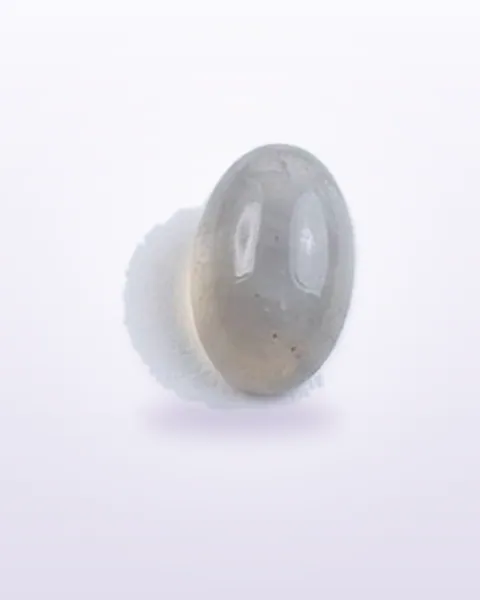
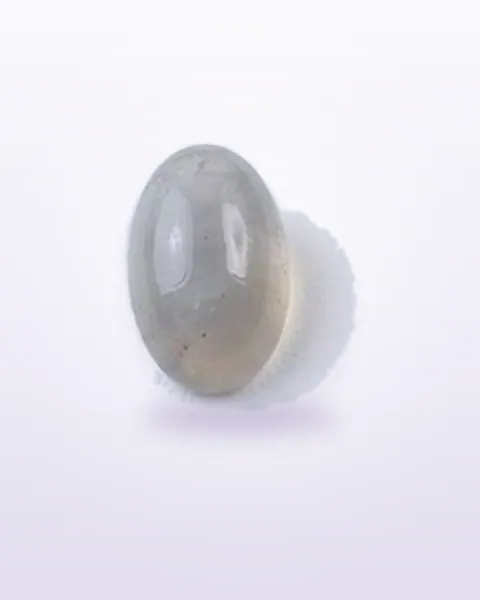


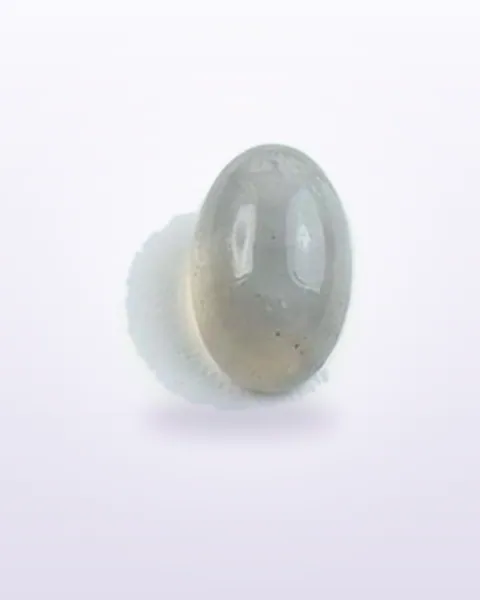
Moonstone is a feldspar made of two minerals stacked in very thin alternating layers. Light scatters between those layers and produces a floating glow called adularescence. In the finest stones it is a vivid blue sheen on an almost clear body; in others it is a soft silvery white. The old name Chandrakant ties it to the moon, chand.
Rainbow moonstone, popular in jewellery, is technically a white labradorite with a multicoloured flash. It is beautiful and widely sold under the moonstone name. Our listings say which one you are looking at.
How to judge the glow
- Sheen: a bright, broad glow that appears near the top of the dome and moves as you tilt the stone is best.
- Body: a transparent body makes the sheen look like it floats; milky bodies look softer.
- Cut: moonstone is cut as a high cabochon so the glow centres properly. A flat or lopsided dome hides it.
Moonstone is generally untreated. Glass imitations called opalite show a bluish glow but often look too even and too orange when held to light. A lab can tell them apart quickly.
In local tradition moonstone is sometimes linked with the Moon and offered as a gentler alternative to pearl. It is especially loved for women's rings, earrings and pendants, and makes a quiet, personal gift.
At 6 to 6.5 on the hardness scale, with two directions of cleavage, moonstone needs care. A bezel protects the edges, and a pendant is safer than a ring for daily wear. Avoid hard knocks, ultrasonic cleaners and sudden heat. Clean with lukewarm soapy water and dry it gently.