
Zamurd: Natural Emeralds
Emerald, the Zamurd of Urdu poetry, is green beryl whose colour comes alive in daylight and whose tiny inclusions are part of its character.
Stones
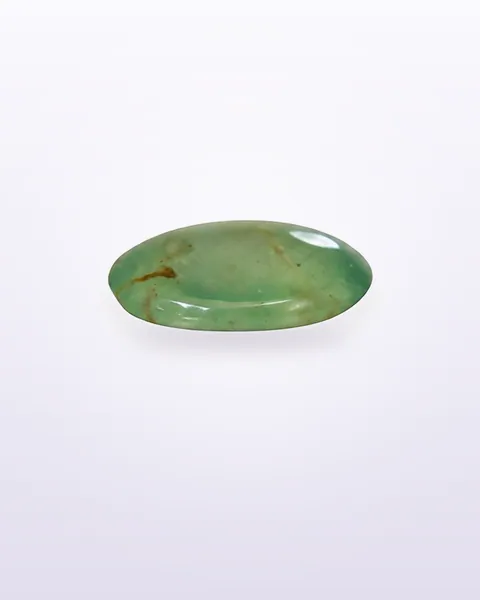

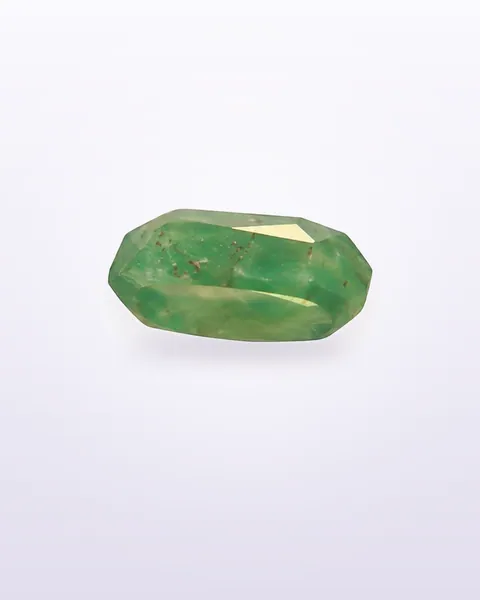
Zamurd is the green variety of beryl, coloured by chromium or vanadium. Pakistan has its own emerald story: the Swat valley has produced small, bright green crystals for decades, and buyers here often know the name. Colombia and Zambia supply much of the world market too.
Almost every emerald contains inclusions. Gemmologists call them the jardin, the garden, and a clean emerald is rare enough to be priced in a different league. The point is not to find a flawless stone but one whose inclusions do not cloud the colour or reach the surface as open cracks.
Oil, resin and what to ask
Filling surface-reaching fissures with oil or resin is the standard treatment for emerald and has been for centuries. Light oiling is normal. Heavy resin filling can hide significant cracks and may cloud over time. If a listing says treatment is not tested, any lab can tell you how much filling a stone has.
Look for a pure to slightly bluish green that stays rich in daylight. Yellowish or very pale stones are cheaper. A step cut, often called the emerald cut, protects the corners and shows colour well.
Tradition links Zamurd with Mercury, and it is commonly worn on the little finger. Emerald earrings and pendants are a classic bridal choice in Pakistan.
Hardness 7.5 to 8 sounds high, but emerald is brittle because of its inclusions. Choose a bezel or protective corners for a ring. Never use an ultrasonic cleaner or steam; wipe with lukewarm water and a soft cloth, and keep it away from hot water and solvents.