
Moss Agate: Green Gardens in Stone
Moss agate is clear to milky chalcedony holding green, branching inclusions that look like moss, ferns or a tiny winter forest.
Stones


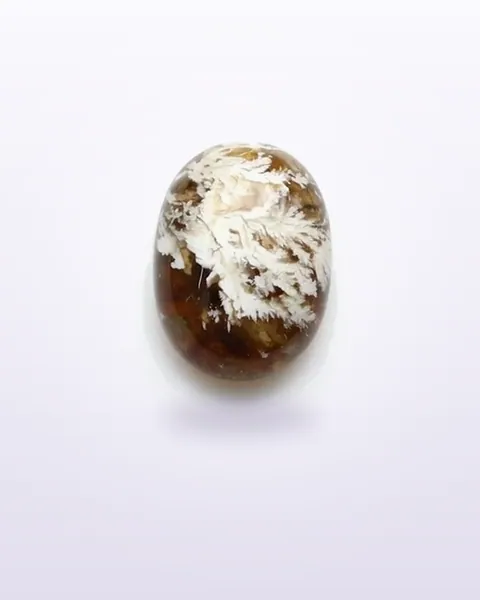

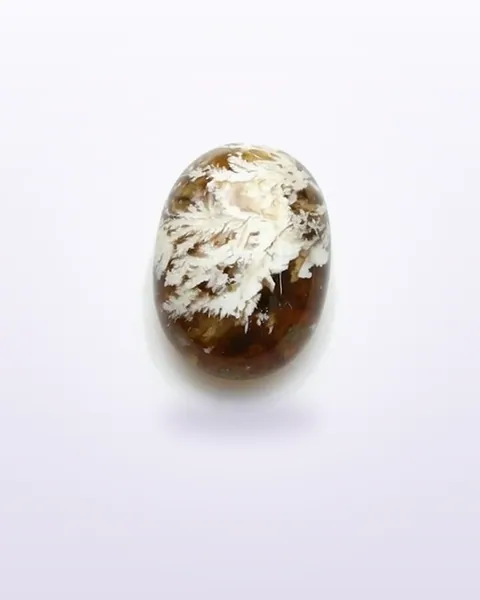
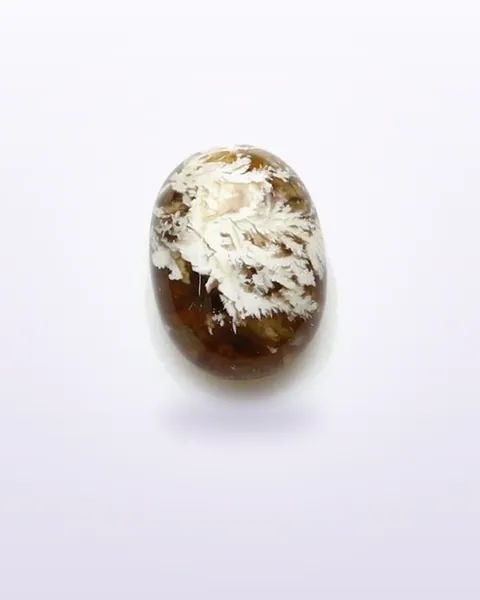
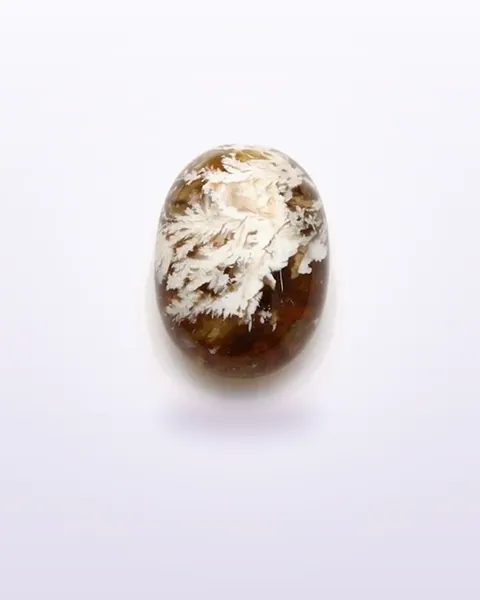
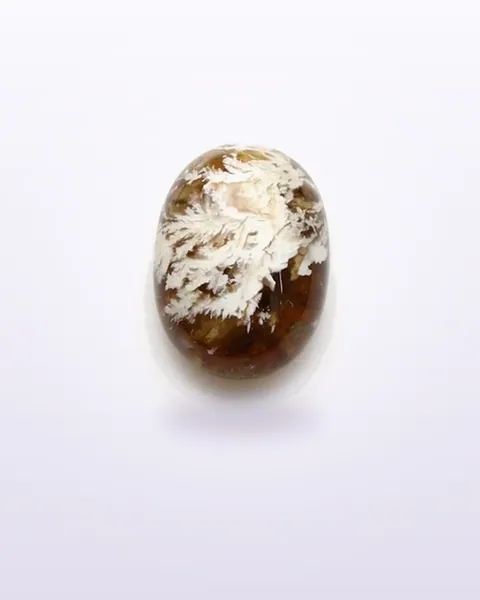
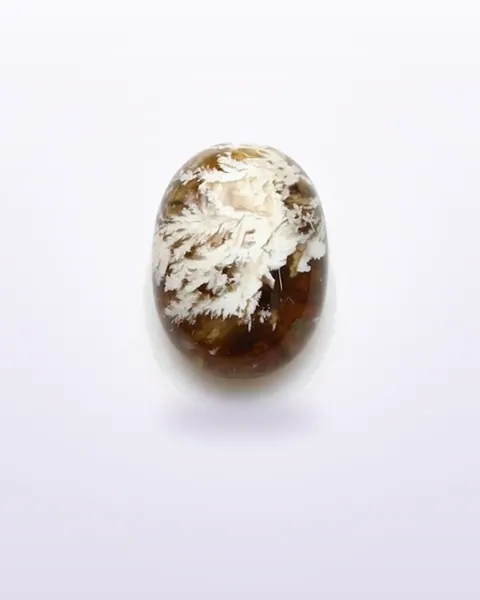
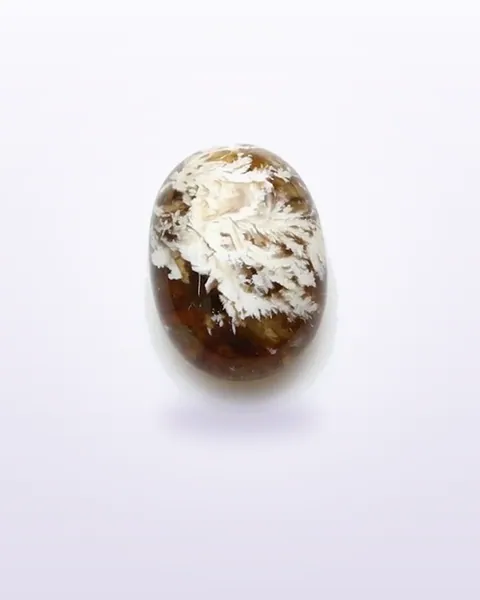
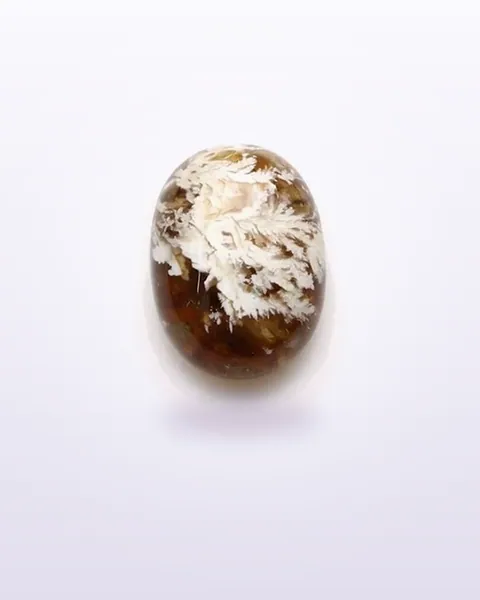
Moss agate is not banded like most agates. It is clear or milky chalcedony containing green mineral growths, usually chlorite or hornblende, that spread in branches and clumps. Held to the light, a good piece looks like a pond with weed drifting through it, or a misty view of the Margalla hills after rain.
No two stones are alike. Some carry dense green clouds, others a few fine fronds against clear stone, and some show brown or reddish patches from iron. The local name is simply Moss Aqeeq.
Choosing a moss agate
Look for a clear or light background, since it lets the green branches stand out. A crisp, well-placed inclusion pattern matters more than size. Translucency adds depth, so hold the stone to a lamp in the photo or in your hand after delivery. Cabochons with a gentle dome show the scene best; flat slices work well in pendants.
Moss agate is generally sold untreated, because the inclusions are what buyers want and dye would spoil them. Glass imitations with painted or printed patterns are uncommon but possible. Natural inclusions show depth when you tilt the stone, while printed ones sit on one flat layer.
The stone has no fixed place in classical astrology, and most people choose it because it looks like nature captured in miniature. It makes a thoughtful gift for a gardener or anyone who loves the outdoors.
Hardness 6.5 to 7 makes moss agate a sturdy everyday stone. A bezel suits rings well, and an open-back setting lets light pass through to show the pattern. Warm water and a drop of soap are all it needs.