
Labradorite: Flashes of Peacock Colour
Labradorite is a grey feldspar that bursts into blue, green and gold when light hits it at the right angle, then falls quiet again.
Stones
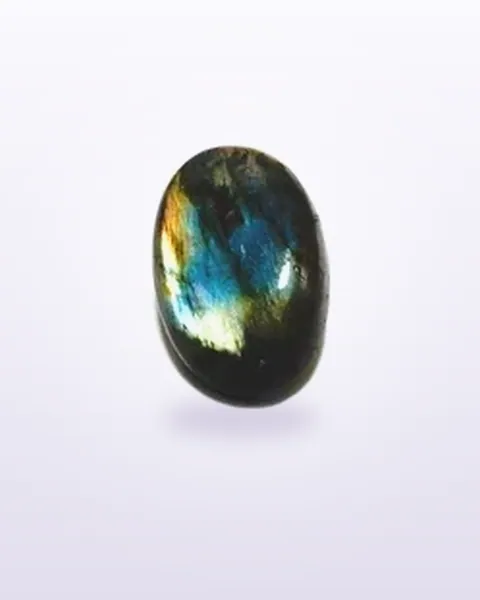
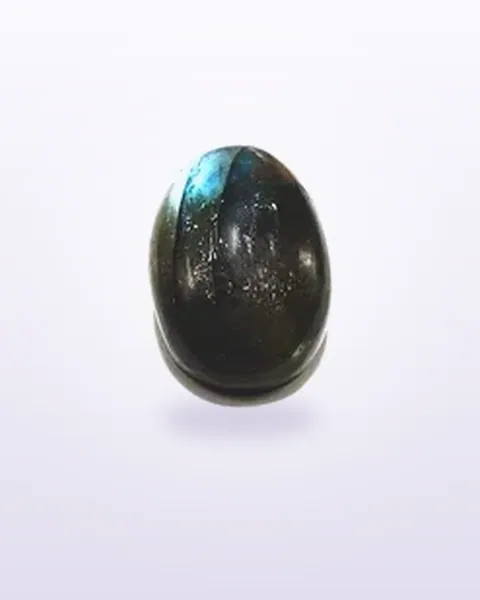

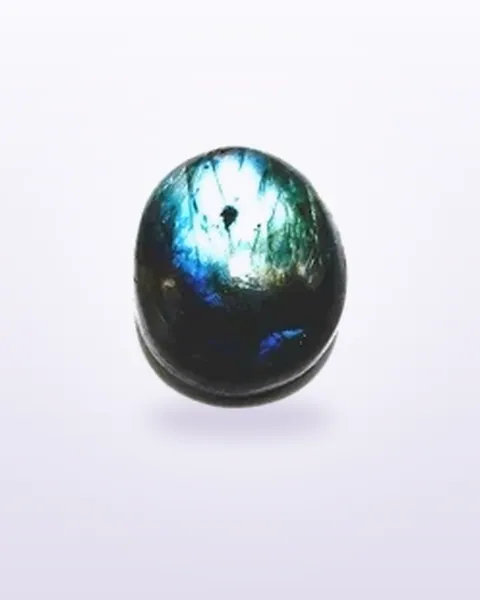
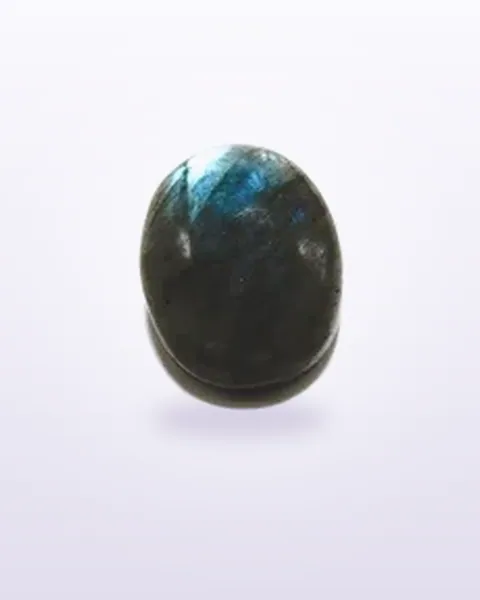

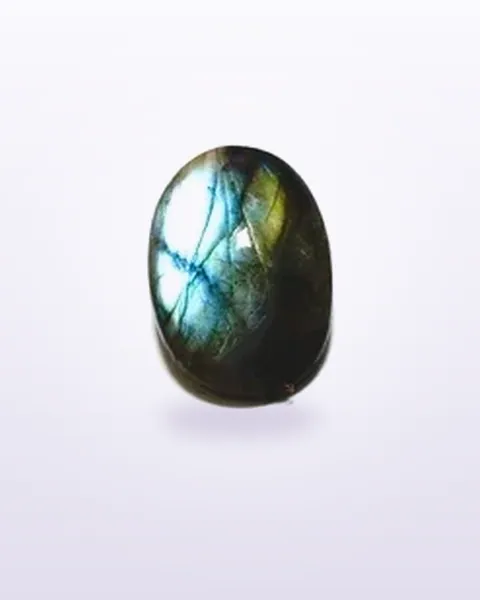

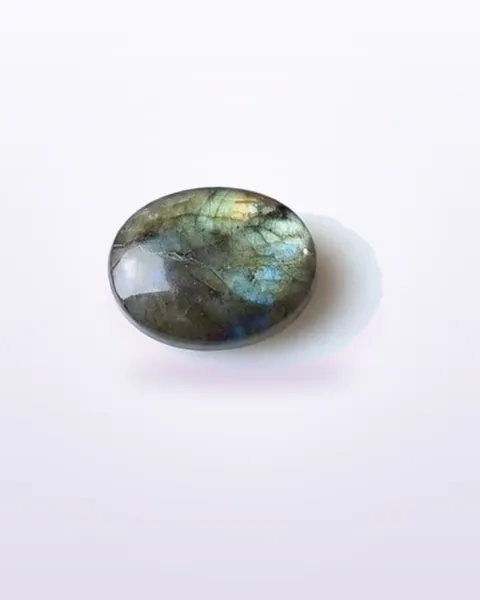

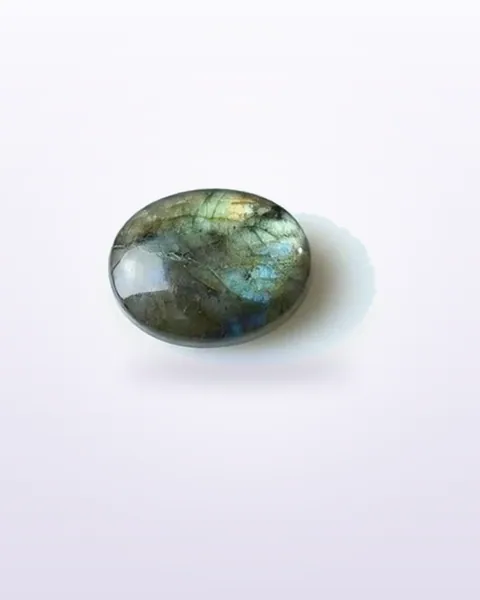
Labradorite is a plagioclase feldspar. At first glance it looks like smoky grey stone. Turn it towards the light and broad sheets of colour switch on: electric blue, peacock green, gold and sometimes copper or purple. This effect, called labradorescence, comes from light reflecting off thin internal layers.
The name comes from Labrador in Canada, where it was first described, but much of today's material comes from Madagascar and Finland. The very finest, full-spectrum material from Finland is sometimes sold as spectrolite.
What to look for
Colour flash is the main value driver. A stone that shows strong, even colour across most of its face at one angle beats one with small patches. Blue is the most common; gold, orange and full rainbow flashes are rarer. The body tone matters too: a darker background makes colours pop. Inclusions and dark lines are normal and part of the character, but cracks that reach the surface are a weakness.
Because the flash depends on angle, a cutter must orient the stone carefully. Photos show the best angle, and in hand you may need to tilt the stone to find it. That moment of discovery is part of the pleasure.
Labradorite has no role in classical South Asian astrology. Buyers choose it for its drama: bold men's rings, statement pendants, cufflinks.
Rated 6 to 6.5 for hardness, with cleavage, labradorite can chip or scratch. A bezel setting suits rings, and pendants are the safest choice for very large stones. Clean with a soft damp cloth and avoid ultrasonic cleaners.