
Sang-e-Yashab Khooni: Bloodstone
Bloodstone is dark green chalcedony scattered with red spots of iron oxide, an old and striking stone for men's rings and seals.
Stones

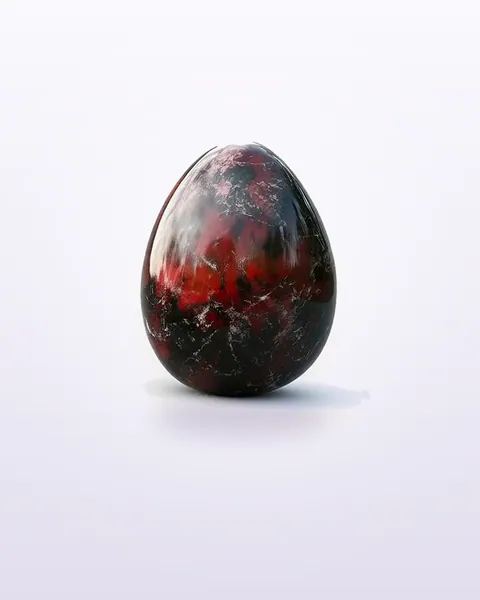


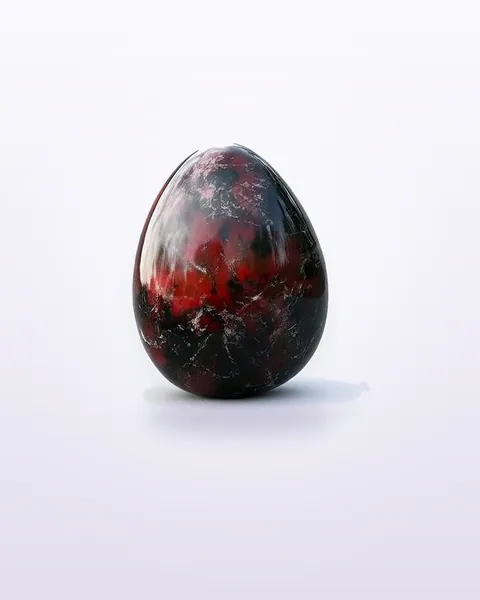
Bloodstone, also called heliotrope, is opaque dark green chalcedony with flecks and patches of red. The green comes from tiny mineral inclusions, and the red from iron oxide. In Urdu it is sometimes called Sang-e-Yashab Khooni, the blood-spotted green stone, because its deep green resembles jade.
India has supplied much of the world's bloodstone for centuries, and it has a long history in seals and signet rings, where engraving shows clearly against the dark surface.
What to compare
A fine bloodstone has a rich, deep green, almost black, with bright red spots spread evenly across the face. Too few spots and it reads as plain green jasper; large brown or yellow patches lower the appeal. Some stones show small white areas of quartz, which are natural but less sought after. A high, glassy polish brings out the contrast.
Bloodstone is almost always untreated. Dyed imitations are rare. Each listing states the treatment status we know.
In older European and South Asian folklore it was linked with courage and the blood, which is where the name comes from. We mention this as history, not as any claim about what the stone does.
- Shapes: ovals and rectangles with a flat top suit engraving.
- Sizes: men's rings commonly use 12 to 20 carats.
- Metals: silver gives a sober look; gold warms the red spots.
With hardness 6.5 to 7 and a tough, fine-grained structure, bloodstone wears well for decades. Clean it with mild soap and water. Avoid harsh acids, which can affect the red iron spots over time.